
Welcome to Stockholm Class!
We hope you have all had a wonderful Easter Holiday.
Here is what we are going to be learning about during the Summer Term.
Our Full Curriculum can be found under: school information / curriculum overview.
cinnamonbrow-warrington.secure-dbprimary.com/ourcurriculum/curriculum/#LongTerm

English
Summer 1: Journey

The mastery focus for this unit will be to:
- Use the present perfect form of verbs in contrast to the past tense
- Use prepositions, conjunctions and adverbs to express time, place and cause (demonstrating some awareness of purpose through selection of relevant content)
- Group related ideas into paragraphs
- Use a or an according to whether the next word begins with a noun or a consonant
- Use small details to describe characters
Spring 2: Amazing Rivers

The mastery focus for this unit will be to:
- Use a or an according to whether
- the next word begins with a vowel or consonant
- Use prepositions, conjunctions
- and adverbs to express time, place and cause
- Group related ideas into paragraphs
- Use the present perfect form of
- verbs in contrast to the past tense
We will also be working on the following:
- Spelling lessons four times a week
- Weekly spellings, grammar, comprehension and whole class reading tasks using the reciprocal reading approach
- Reading Plus and Reading eggs in class and at home


Mathematics
This term, across the key stage, we will learn about:
Compare and order unit fractions
Calculate the value of a part (fractions as operators)
Non-unit fractions
Composition of non-unit fractions: addition and subtraction
Parallel and perpendicular sides in polygons
Tell the time to the nearest minute and compare units of time
In Year 3 and 4 we are teaching mastery in our maths lessons. Through carefully planned teaching and the support of Oak Academy, which is underpinned by the NCETM, we enable all children to access the maths curriculum at their level and open up opportunities for all children to work within a mastery approach.
Mastering maths means pupils acquiring a deep, long-term, secure and adaptable understanding of the subject. The phrase ‘teaching for mastery’ describes the elements of classroom practice and school organisation that combine to give pupils the best chances of mastering maths. Achieving mastery means acquiring a solid enough understanding of the maths that’s been taught to enable pupils to move on to more advanced material.
As a teaching team across phase and with teaching assistants, we work closely to plan, assess and evaluate each lesson to ensure the needs of every child are met. Additional time can be given in the afternoons or mornings if a child has struggled with a concept or we feel they need some pre learning to aid them in their understanding.
TT Rockstars: This is an online multiplication recall program. The children also have access to TTrockstars to support their Maths progression through app and online resources.

Science
Light- Continuing

- How are shadows formed?
- Does all materials create shadows?
- How can we change the size of a shadow?
States of matter
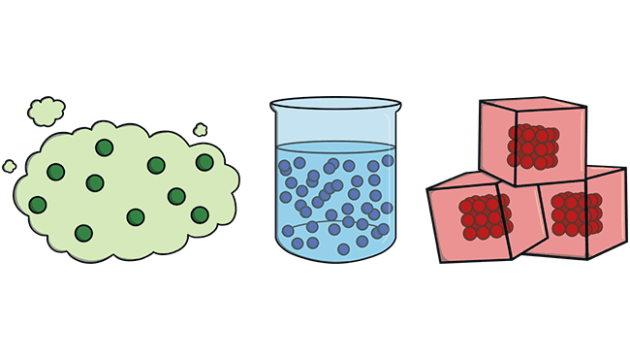
- What is the difference between a solid, a liquid and a gas?
- How can we make materials change from one state to another?
- How does the temperature of the water affect the time it takes for ice to melt?
- How does the temperature of the air affect the time it takes for water to evaporate?
Living things and their habitats

- What makes something alive?
- What is a vertebrate and an invertebrate?
- Can I arrange living things by their properties?
- What living things can be found in my local area?
- Environmental changes around the world
RE
As a Church of England School, Religious Education is a core subject and alongside collective worship is a very important part of school life. RE & worship takes place throughout the school day with daily prayers, whole school and class worship and the sharing of our Christian values. 
This term the focus taken from the Diocese scheme of work is:
Why do Christians believe that Jesus is the son of God?

To be able to retell the Bible stories we have talked about.
To make links between the Bible stories and what Christians believe about Jesus.
To use religious language to show that I understand that Christians
believe that Jesus was both God and man.
To talk about why sometimes people speak out against authority for justice.
To tell you about what I have learnt and who has inspired me.
Use religious language, about the traditions and meaning of Jewish Shabbat
David and the Psalms

What values do you consider to be important?
Who inspires you?
What are the qualities of a good King?
What is God like?
PSHE
Heartsmart
Get Heartsmart!
Heartsmart means being smart with our hearts. The life of our heart affects the whole of our life. Loving yourself and others is the most powerful way to live and it’s the best way to create true friendship. We become powerful when we love ourselves and when we love others. HeartSmart is about putting good things into our heart so that good things come out. It’s about watching what we allow in and thinking about how we let what’s in come out.

Fake is a mistake
Exploring the importance of telling the truth.
No way through isn’t true
Understanding how preserve and never give up.
Geography
 Why are rivers important?
- What is the water cycle?
- Is a river the same from source to mouth?
- What are some of the longest rivers in the world?
- Why do rivers flood?
- How do we use water?
- Why do we need water and where does it come from?
- Does everyone have enough water?
History
 How do the ancient civilisations compare?
Here are the questions we will find answers to as we learn together:
- Who were the ancient civilisations, when did they live and what did they have in common?
- What was life like in the Indus Valley cities?
- What have archaeologists found out about the Indus Valley civilization?
- What do artefacts tell us about Ancient Sumer?
- Who were the Shang?
- Why was the Nile so important to Ancient Egypt?
- How did the Ancient Egyptians writing evolve?
- What was the importance of the afterlife in Egyptian society?
Computing

Copyright and Ownership
Sequence in Music
- Explore a new programming environment
- Identify that sprites are controlled by commands
- Explain that a program has a start
- Recognise a sequence of commands can have an order
- Change the appearance of a projects
- Create a project to serve a purpose
Art
Painting and mixed media: Prehistoric painting

- To apply an understanding of prehistoric human-made art.
- To understand and use scale to enlarge drawings in a different medium.
- To explore how natural products produce pigments to make different colours.
- To select and apply a range of painting techniques.
- To apply painting skills when creating a collaborative artwork.
DT
Cooking and nutrition
There will be opportunities for the children to learn about seasonal foods and to create a seasonal foods tart.

- Explain that fruits and vegetables grow in different countries based on their climates and identify which grow where.
- Understand that seasonal fruits and vegetables grow in a given season and that eating them in season positively affects the environment.
- Identify which foods grow in which season and find recipes that contain seasonal foods.
- Know that importing food impacts the environment.
- Identify the equipment used to prepare food and explain why food needs to be prepared safely.
- Describe the taste of various fruits and vegetables and identify flavours.
- Design a seasonal dish and describe the ingredients’ nutritional benefits.
- Evaluate the dishes and give and receive feedback to identify strengths
MFL - French

Breakfast, fruit and the hungry giant
Going on a picnic
Music

This half term the children will take part in music lesson delivered by Early Notes Music. They are led by Martin Lynch and he will teach them the skills needed to begin playing the glockenspiel.
PE
 Using Complete PE the children will take part in athletics, swimming and challenging collaboration.
PE will take place each Thursday for Stockholm.
We are requesting that on their PE day children come to school dressed for PE with appropriate outdoor PE kit.
Please refer to the school prospectus for PE kit details: School prospectus
OPAL Playtimes

How can you support?
Please ensure that your child brings their water bottle and reading book bag into school every day.
Please continue to read with your child at home at least five times a week and record this in the reading record book each time. This is very important.
Spelling - Spelling will be brought home each Friday for the children to practise their spelling at home as they are being taught during the week. The children will bring home a list of key spelling strategies that they can use to support them to learn and remember their spellings. They must return the books to be checked each Thursday.
Maths
Research shows that completing maths activities little and often is the best way to retain recall skills.
Here are some of the maths activities you can access online.

TT Rockstars: This is an online multiplication recall program accessible for all learners.
Key Information
Please ensure that you bring your child's school reading book bag back into school daily as this will be used to bring home important letters and it will keep our reading books safe.
Our PE day is Thursday. On this day we come into school in our PE kit ready for our PE sessions outside.
Your child should bring in a water bottle that is sent home to be thoroughly cleaned each evening.
Projects
Homework projects will be shared each term by the class teachers. These opportunities are for you to share in your child’s learning about the world around them through history, geography, science and the arts. Please support your children in completing these projects.
Staff
Teacher - Mrs Johnson
Teaching Assistants - Miss Hughes, Miss Ozanne, Mrs Bennett